How to Play Blackjack: Rules and Basics
Blackjack is one of the most skillful and mathematically rich casino games. In this article you will learn How to Play Blackjack: Rules and Basics in a way that goes beyond simple procedures and explains the underlying logic that drives good decisions at the table. This guide emphasizes rules, card values, betting mechanics, expected value concepts, common mistakes, and practical strategies that experienced players use to reduce the house edge while maintaining responsible play.
What is Blackjack and what is the objective?
Blackjack is a comparing card game played between one or more players and a dealer. The objective is to beat the dealer’s hand by either:
- Achieving a hand total higher than the dealer’s without exceeding 21, or
- Letting the dealer draw to a total that exceeds 21, which is called busting.
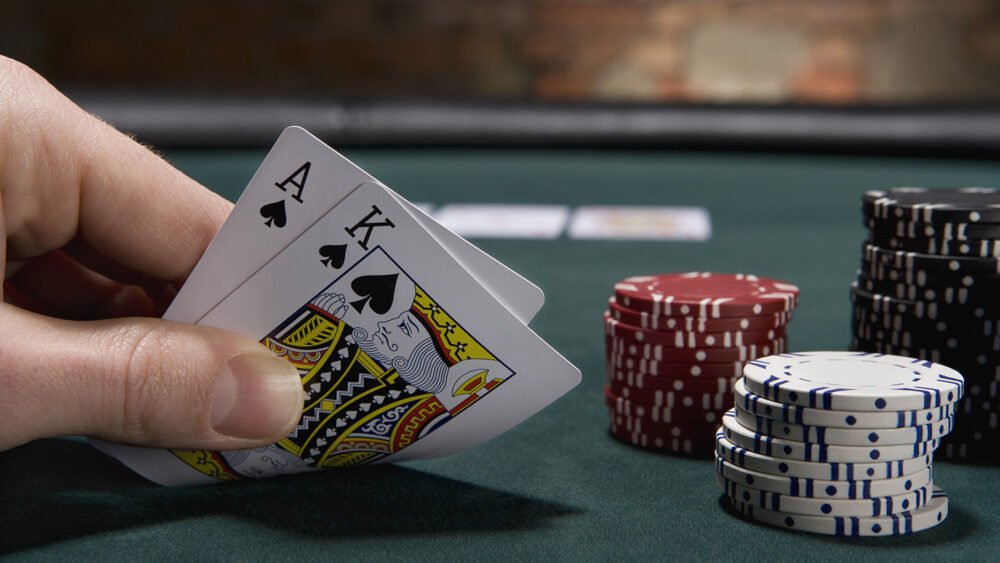
A two-card hand totaling 21 with an Ace and a ten-value card is called a Blackjack and usually receives the best payout. The game combines chance with decision points where the player’s choices influence long term results.
Core rules you must know
Decks and shoe
Casinos use from one up to eight standard 52-card decks. More decks increase the house edge slightly and change strategy nuances. The cards are often mixed and dealt from a shoe in multi-deck games.
Card values
- Number cards 2 through 10 count as their face value.
- Face cards Jack, Queen, King count as 10 each.
- Ace counts as 1 or 11 depending on which value benefits the hand without busting.
Understanding how Aces create soft and hard hands is central to correct decisions.
Hand types
- Soft hand: Any hand containing at least one Ace counted as 11 without busting, for example Ace-6 (soft 17).
- Hard hand: A hand with no Ace counted as 11, or where the Ace must count as 1 to avoid busting, for example 10-7 (hard 17) or Ace-9 when Ace is counted as 1 because of an extra card.
Dealer rules
The dealer acts according to fixed rules, not strategy choices. Typical rules:
- Dealer hits until reaching at least 17.
- In some games the dealer stands on soft 17 and in others the dealer hits on soft 17. This variation changes the house edge by a small but measurable amount.
Knowing the dealer rule is essential because it affects the correct strategy and expected value.
Payouts
- A standard winning hand pays 1 to 1.
- A natural Blackjack typically pays 3 to 2 in traditional rules. Some games pay 6 to 5, which increases house edge dramatically and should be avoided.
- Insurance pays 2 to 1 when the dealer shows an Ace but is generally a negative expectation bet for the player.
Game flow: step by step
1. Place your bet
Players place a wager before cards are dealt. Bet sizing should be governed by your bankroll plan.
2. Initial deal
Each player and the dealer receive two cards. Player cards are usually face up. The dealer shows one card face up (the upcard) and one card face down (the hole card) in most American style games.
3. Player decisions
In turn, each player may:
- Hit: request another card.
- Stand: take no more cards and lock the current hand.
- Double down: double the original bet and receive exactly one more card.
- Split: if the first two cards are the same rank (for example two 8s) you can split them into two separate hands, each with a new bet equal to the original.
- Surrender (if offered): forfeit half the bet and end the hand immediately. There are usually two types: early surrender and late surrender. Early surrender is more favorable to the player but is rarely offered.
- Take insurance: When dealer shows an Ace, you may place an insurance side bet up to half your initial bet against the dealer having a Blackjack.
4. Dealer plays
After players finish, the dealer reveals the hole card and plays according to the house rules. Dealer actions are automatic and consistent.
5. Hand resolution
Hands are compared; winning bets are paid, ties push, Blackjack pays the higher bonus when applicable.
Betting mechanics and expected value insights
House edge and edge drivers
The house edge is the casino’s long-term percentage advantage over players. Key factors that change the house edge:
- Number of decks
- Dealer stands or hits on soft 17
- Blackjack payout (3:2 versus 6:5)
- Availability of doubling after splitting and re-splitting aces
- Rules on surrender and late versus early surrender
Small rule changes move edge by tenths of a percent. Over many hands those fractions compound. Choosing good rule sets reduces the house edge and improves expected value.
Why doubling and splitting matter
Doubling down and splitting are high-leverage plays that, when used with correct strategy, increase the player’s expected return on favorable situations. For example:
- Doubling on a hard 11 is almost always correct because you have a strong chance of ending with a total near 21.
- Splitting pairs like 8s or As is usually right because each card by itself has better prospects than the combined weak hand.
Insurance and side bets
Insurance is a conditional bet that the dealer has Blackjack. In the long run, insurance is a negative expectation bet for standard play. Side bets offered by casinos are typically high variance and substantially increase the house edge. Treat side bets as entertainment, not long-term profit tools, unless you have robust statistical evidence to the contrary.
Basic strategy: decision rules anchored in math
Basic strategy is a table of optimal moves derived from millions of simulated hands that minimize house edge when you cannot count cards. It tells you whether to hit, stand, double, or split given your hand and the dealer’s upcard.
Key strategy principles
- Stand on hard 12 to 16 when dealer shows 2 through 6 because dealer is likely to bust.
- Hit on hard 12 to 16 when dealer shows 7 through Ace because dealer is less likely to bust.
- Always split Aces and 8s.
- Never split 10-value cards.
- Double on hard 10 or 11 versus dealer low upcards.
- Use soft-hand rules: for instance stand on soft 19 and 20; double on soft 16 through 18 against weak dealer upcards in many rule sets.
Where to get the correct basic strategy
Basic strategy differs slightly by exact house rules and deck count. Printed strategy charts or apps tailored to the table rules give the optimal decisions. Learning the correct chart for your chosen game reduces the house edge to near its minimum for non-counting players.
Advanced topic: card counting and advantage play (overview)
Card counting estimates when the deck is rich in tens and Aces, improving the probability of player Blackjacks and favorable double opportunities. Important considerations:
- Card counting is not illegal in most jurisdictions, but casinos can restrict players and refuse service.
- Counting requires concentration, practice, and camouflage to avoid detection.
- Modern casino countermeasures include frequent shuffling, continuous shuffling machines, and increased deck counts.
This article provides a high level view rather than step-by-step counting instructions. If you plan to explore advantage play, study reputable books and practice in low-stakes environments where there is no policy risk to personal safety.
Bankroll management and session planning
Effective bankroll management is as important as correct decisions at the table.
- Set a session bankroll distinct from overall gambling funds.
- Use unit betting: pick a small percentage of your session bankroll as your standard unit, commonly 1 to 2 percent.
- Avoid chasing losses. Decide in advance your stop-loss and profit target for a session.
- Expect variance: even correct play will produce losing streaks. Ensure bankroll covers variance.
Practical example: With a session bankroll of 200 units and a unit equal to 1 percent, your bets will typically be small enough to absorb normal variance.
Table etiquette and practical tips
- Wait your turn to act. Do not touch your chips or cards until the dealer opens betting.
- Use hand signals for actions in casinos: tapping the table for a hit, waving off for stand, pushing chips forward to double, separating chips to split.
- Tip the dealer respectfully, especially if you win big or the dealer has aided an enjoyable session.
- Observe the minimum and maximum bet limits and choose tables that match your bankroll.
Online blackjack: differences and considerations
Online blackjack often differs from live casino play in important ways:
- Continuous shuffling: many online variants use random number generation to mimic infinite decks, which eliminates counting opportunities.
- Game speed: online play is faster; adjust bankroll and mental pacing accordingly.
- Rule transparency: reputable sites publish exact rules and payout tables. Always verify Blackjack payout and dealer soft 17 rule before playing.
- Bonuses and wagering requirements: online casinos advertise sign-up bonuses with wagering requirements that change effective value. Read terms carefully.
Variations and rule variants to watch for
Blackjack has many popular variations which change strategy:
- European Blackjack: dealer gets hole card only after players act; affects doubling and surrender choices.
- Spanish 21: played from a deck with all tens removed; many player-friendly rule enhancements offset this major deck change.
- Pontoon: a British variant with different terminology and payout rules.
- Double Exposure Blackjack: dealer’s cards are exposed but rules are adjusted to compensate.
Always check rule variations and their impact on strategy and house edge before you play.
Common mistakes that cost money
- Taking insurance routinely.
- Playing at tables with poor Blackjack payout like 6 to 5.
- Ignoring the dealer’s soft 17 rule when choosing strategy.
- Overbetting relative to bankroll size, which increases the chance of ruin.
- Mixing intuition or “gut feeling” with mathematically weak decisions rather than following basic strategy.
Responsible play and legal considerations
Blackjack should be played for entertainment with clear limits. Gambling responsibly means:
- Setting and respecting deposit and session limits.
- Never wagering money you need for essentials.
- Seeking help if gambling stops being fun or begins causing financial or emotional harm.
Legalities: Blackjack is legal in permitted jurisdictions but regulated. Know local laws and site licensing when playing online.
Real-world examples: applying decision logic
Example 1: You have 12, dealer shows 5
The dealer’s upcard is weak so the correct basic play is to stand. The dealer has a high probability of drawing to 16 and busting.
Example 2: You have Ace-6 (soft 17), dealer shows 3
In many rule sets you should double if allowed because a soft 17 has good chances to improve and doubling increases expected return.
Example 3: You have a pair of 8s, dealer shows 10
Split the 8s. Two hands starting from 8s have better prospects than one hard 16.
These examples illustrate why strategy is conditional on both your cards and the dealer’s upcard.
Practical path to improvement
- Memorize a basic strategy chart for your preferred rule set.
- Practice with online free-play or low-stakes tables.
- Track your results over time to measure whether you are executing strategy and managing bankroll properly.
- Read authoritative books and simulation studies for deeper insight into variance and expected value.
FAQ
What should I do if the table pays Blackjack 6 to 5?
Avoid it. A 6 to 5 payout increases the house edge dramatically compared to 3 to 2, making the game substantially worse for the player.
Is surrender ever a good option?
Yes, late surrender is correct in certain hard hands versus strong dealer upcards when the expected loss from playing on is worse than forfeiting half the bet. Surrender availability and type affect the correct play.
Does counting cards guarantee profit?
No. Card counting can shift expected value in the player’s favor under favorable rules, but it does not guarantee short term wins. It requires skill, bankroll, and the right environment.
Can I use a basic strategy app at the table?
Using electronic devices at casino tables is prohibited in most casinos. Learn the strategy beforehand or use mental cues. Online play allows in-session references depending on site rules.
How important is seat position at a live blackjack table?
Seat position matters marginally. Acting earlier gives the dealer one fewer card known before you must act, but the effect on long-term expectation is minor. Strategy remains the same regardless of seat.
Are side bets worth playing for a serious player?
Most side bets have a much higher house edge than the base game. Treat them as entertainment. Serious players focused on minimizing losses should avoid persistent side bets.
How can I practice without risking money?
Use free online simulators and smartphone trainer apps that enforce basic strategy and allow you to practice doubling, splitting, and surrender scenarios.
What is the single biggest factor that reduces house edge?
Playing at tables that pay 3 to 2 for Blackjacks, allow doubling after splitting, and have dealer stand on soft 17 generally offer the most favorable conditions for the player, all else being equal.
Closing notes on mastering the game
Blackjack rewards study, disciplined execution, and sound bankroll management. By internalizing the logic behind How to Play Blackjack: Rules and Basics, learning basic strategy, and choosing favorable rule sets, a player can reduce the house advantage to the lowest practical level. Over time, disciplined players focus on process rather than individual session outcomes, knowing that correct decisions yield the best long-term results.
If you want, I can provide a printable basic strategy chart tailored to a specific table rule set, a sample bankroll plan for conservative or aggressive players, or a drill plan to practice the most common decision scenarios.

Related Posts
How Probability Shapes the Game of Blackjack