How Probability Shapes the Game of Blackjack
Unlike games of pure chance like roulette, slot machines, or keno, where each round represents a completely independent trial, blackjack is a game of dependent events. Every card dealt from the shoe alters the composition of the remaining deck, directly shifting the mathematical probabilities of all subsequent hands.
Because blackjack operates within rigid mathematical boundaries, every decision—whether to hit, stand, double down, split pairs, or surrender—carries an exact mathematical expectation. By understanding how probability governs dealer constraints, deck composition, card values, and house edges, players can replace emotional guesswork with mathematically optimal decision-making.
The Mathematical Foundation: Dependent Probability and Deck Memory
The cornerstone of blackjack mathematics is the concept of non-replacement. When a card is dealt in blackjack, it is discarded until the shoe is reshuffled. This creates a conditional probability framework where past events dictate future outcomes.
Several probabilistic factors define how card removal impacts the deck:
-
Ten-value card density: Standard decks contain sixteen cards with a value of ten (tens, jacks, queens, and kings) out of fifty-two total cards, meaning ten-value cards represent exactly 30.77 percent of any full shoe.
-
Depletion and variance: If several low-value cards (twos through sixes) are dealt in early rounds, the remaining deck becomes disproportionately rich in ten-value cards and aces, which favors the player by increasing the likelihood of blackjacks and dealer busts.
-
Dealer asymmetry: The player has strategic freedom to hit, stand, double down, or split, whereas the dealer must follow fixed, deterministic house rules with zero personal discretion.
Understanding this dependent nature allows mathematicians to calculate the exact theoretical advantage or disadvantage of any specific table scenario.
The Dealer Inflexible Rules and Bust Probabilities
The fundamental house advantage in blackjack stems from a simple structural rule: the player must act first and will lose their stake immediately upon busting, even if the dealer subsequently busts in the same hand. To offset this inherent disadvantage, the rules force the dealer to follow rigid operational constraints.
The dealer rules create predictable mathematical vulnerabilities based on the visible upcard:
-
Mandatory drawing: In standard casino formats, the dealer must hit any hand totaling sixteen or fewer and must stand on all hands of seventeen or higher (with variations on soft seventeen).
-
Vulnerable upcards (fours, fives, and sixes): When the dealer shows a 5 or a 6, they have the highest mathematical probability of busting—approximately 42.89 percent for a 5 and 42.08 percent for a 6 in standard multi-deck games.
-
Strong upcards (sevens through aces): When the dealer shows a 7, 8, 9, 10, or Ace, their probability of achieving a final hand between 17 and 21 rises above seventy percent, while their bust probability drops significantly (down to approximately 21.43 percent against an Ace).
Because the dealer cannot choose to stand on a stiff hand (twelve through sixteen), basic strategy instructs the player to stand on weak hands when the dealer shows a weak upcard, effectively letting the dealer take the risk of exceeding twenty-one.
The Mechanics of Basic Strategy
In the late 1950s and early 1960s, mathematicians utilizing early computer simulations calculated the statistically optimal play for every possible combination of player hand and dealer upcard. The resulting system, known as basic strategy, minimizes the long-term mathematical house edge to its absolute minimum—typically around 0.5 percent under standard casino rules.
Basic strategy is divided into distinct operational directives based on probability distributions:
-
Hard totals: Hands without an Ace (or where an Ace must count as one to avoid busting). For example, basic strategy dictates hitting a hard 12 against a dealer 2 or 3, but standing against a dealer 4, 5, or 6, because the probability of the dealer busting on 4 through 6 outweighs the risk of the player busting on a 12.
-
Soft totals: Hands containing an Ace counted as eleven without busting. Soft totals allow aggressive doubling down (such as doubling a soft 18 against a dealer 3, 4, 5, or 6) because the player cannot bust with a single additional card, while the dealer faces a high probability of making a weak total or busting.
-
Pair splitting: Splitting converts one mediocre hand into two independent offensive opportunities. Basic strategy mandates always splitting Aces and eights: splitting Aces maximizes the chance of hitting two twenty-ones, while splitting eights breaks up a disastrous starting total of sixteen into two potential eight-based hands.
-
Doubling down: Doubling allows the player to double their original wager in exchange for receiving exactly one additional card. This move is mathematically deployed when the player holds a strong situational advantage over a weak dealer upcard, such as holding a hard 10 or 11 against a dealer 5 or 6.
Following basic strategy does not guarantee winning every individual hand; rather, it guarantees that over thousands of iterations, the expected monetary loss per hand is minimized to the lowest possible mathematical baseline.
The Probability of the Natural Blackjack and Payout Discrepancies
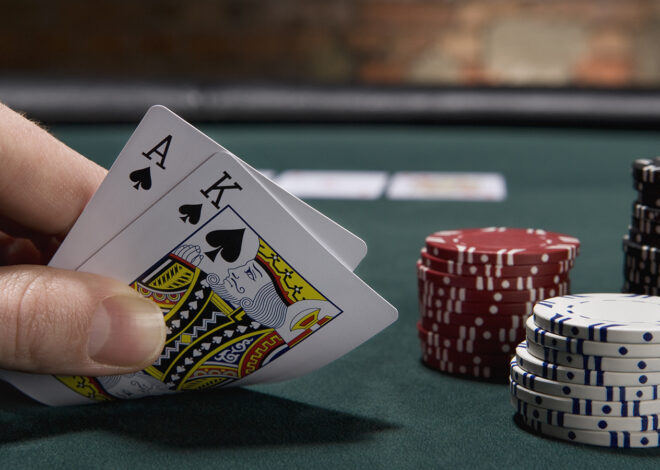
A natural blackjack occurs when a player is dealt a two-card combination consisting of an Ace and any ten-value card. The probability of receiving a natural blackjack in a single-deck game is calculated as:
-
Single-deck calculation: There are 4 Aces and 16 ten-value cards in a 52-card deck. The probability is calculated as $(4/52 \times 16/51) + (16/52 \times 4/51) = 64/1326 + 64/1326 = 128/1326 \approx 4.83\%$ (or roughly 1 in every 20.7 hands).
-
Multi-deck dilution: In an eight-deck shoe, the probability drops slightly to approximately 4.75 percent due to the larger pool of total cards.
The standard historical payout for a natural blackjack has always been 3:2 (paying fifteen dollars on a ten-dollar bet). However, many modern commercial casinos have introduced a 6:5 payout structure (paying twelve dollars on a ten-dollar bet).
This subtle shift in payout structure has a massive mathematical consequence:
-
House edge expansion: Moving from a 3:2 payout to a 6:5 payout adds approximately 1.39 percent directly to the casino house edge, instantly transforming a fair, low-edge strategy game into a heavily house-favored format.
-
Loss of natural compensation: The 3:2 payout serves as the primary mathematical offset against the dealer act-last advantage. Reducing that payout destroys the statistical equilibrium of basic strategy.
How Card Counting Exploits Deck Composition
Card counting is simply an applied form of conditional probability tracking. It does not require memorizing every card dealt; rather, it tracks the ratio of high cards (tens and aces) to low cards (twos through sixes) remaining in the undealt shoe.
The mathematical principles behind tracking this ratio include:
-
High-card richness benefits the player: When the shoe has a surplus of ten-value cards and aces, the player probability of hitting natural blackjacks (paid at 3:2) increases, double downs succeed more frequently, and the dealer bust rate rises on stiff hands.
-
Low-card richness benefits the house: When low cards dominate the remaining deck, the dealer rarely busts their stiff hands, and player double downs frequently result in weak totals.
-
Dynamic bet sizing: Card counting systems assign point values to cards (such as plus one for low cards and minus one for high cards). As the running count rises into a positive true count, indicating a statistically favorable deck, the player increases their wager size to capitalize on the temporary mathematical advantage.
When the deck becomes sufficiently rich in high cards, the theoretical edge flips from the casino to the player, generating a long-term player advantage of one to two percent.
Frequently Asked Questions
Why should a player never take insurance according to probability?
Insurance is an independent side bet that the dealer downcard is a ten-value card when an Ace is showing, paying 2:1. In a standard fresh shoe, there are 16 ten-value cards and 35 non-ten cards remaining out of the unseen 51 cards. The probability of the dealer having a ten is $16/51$ (31.37 percent), which translates to a house edge of roughly 7.4 percent in multi-deck games, making it an unprofitable wager for non-counting players.
Does a previous losing streak increase the probability of winning the next hand?
No. Assuming the composition of the remaining shoe has not shifted dramatically toward high cards, past consecutive losses have no direct causal link to the outcome of the immediate next hand. Believing that a win is due after several consecutive losses is an example of the gambler fallacy.
How does the number of decks in a shoe affect player advantage?
Fewer decks favor the player. Single-deck games offer slightly higher probabilities of receiving natural blackjacks, higher double-down success rates, and lower variance than six-deck or eight-deck shoes. Adding more decks to the shoe dilutes card-removal effects and slightly increases the casino baseline house advantage by roughly 0.5 to 0.6 percent compared to single-deck games with identical rules.
Why is hard sixteen considered the worst hand in blackjack probability?
A hard 16 (such as a 10 and a 6) is the most difficult hand because hitting carries an exceptionally high bust rate of approximately 61.5 percent (drawing any 6, 7, 8, 9, or 10 busts the hand). However, standing against a dealer high card (7, 8, 9, 10, or Ace) results in a loss roughly 74 to 77 percent of the time because the dealer is likely to make 17 or higher without busting.
What is the mathematical difference between soft seventeen and hard seventeen for the dealer?
When the rules require the dealer to hit on soft seventeen (an Ace and a 6), the house advantage increases by approximately 0.22 percent. Hitting gives the dealer a free opportunity to improve a mediocre total of 17 into an 18, 19, 20, or 21 without risking an immediate bust on the first card drawn.
Can using a continuous shuffling machine eliminate the mathematical basis of basic strategy?
No. Continuous shuffling machines (CSMs) eliminate card counting because discards are recycled immediately back into the shoe after every round, preventing high-card or low-card imbalances from accumulating. However, basic strategy remains completely valid and mathematically mandatory against a CSM, as each hand must still be played against the static probabilities of a full deck distribution.

Related Posts
The Best Blackjack Strategies for Beginners